Showing posts with label Expanding Tech Horizon. Show all posts

Monday, 2 January 2012

All about SDH:A pictorial perspective......

Dear Friends,

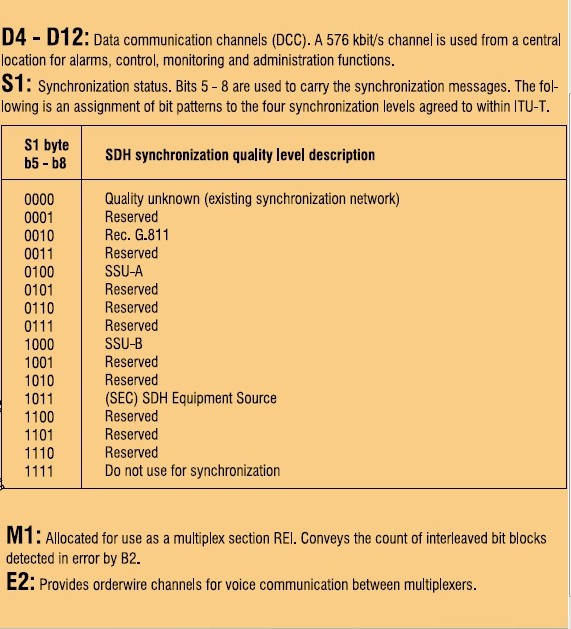
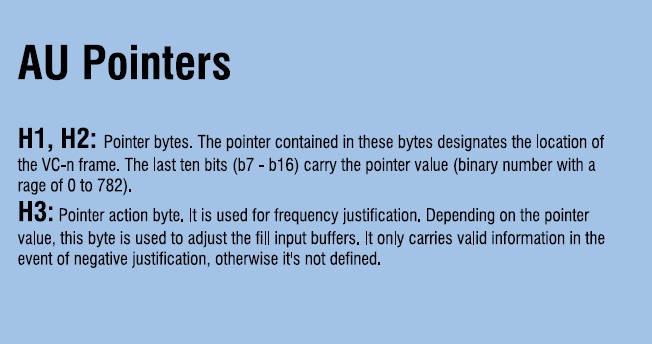
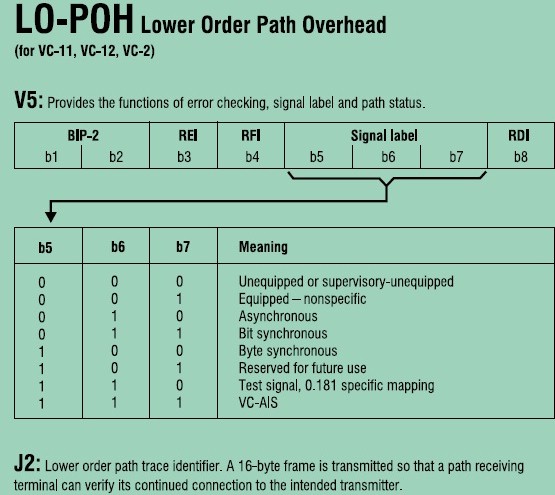
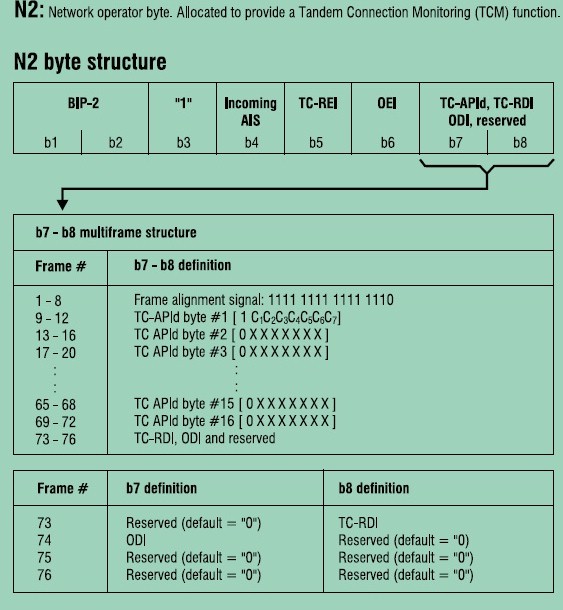
Sometime we require something that help us to understand SDH in quick mode.For this I have collected some snapshots that will help you crack your interviews as well as make you loaded with the know hows of the same..

1.SDH frame:-

 2.Mapping structure:-

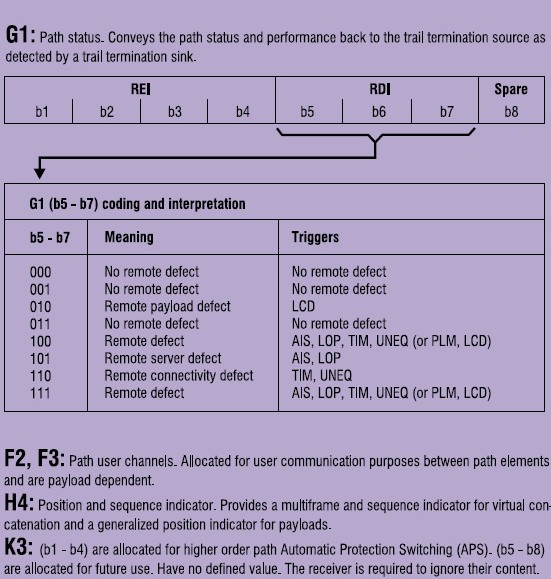
3.Overheads:-


4.Path Overheads:-


5.Concatenation:-

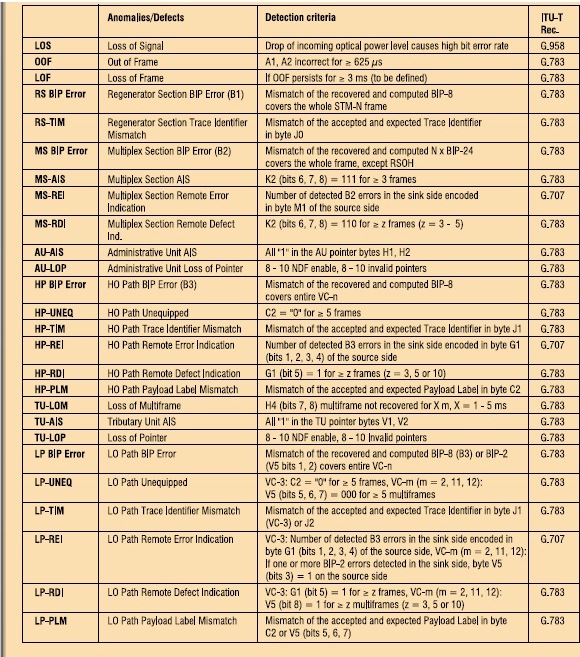
6.Alarms:-

7.Alarm Flow:-


Your concerns and queries will be highly appreciated..........

Sunday, 14 August 2011

WHY LTE-Long Term evolution, a technological hot topic?

LTE is popularly called a 4G technology. It is an all-IP technology based on orthogonal frequency-division multiplexing (OFDM), which is more spectrally efficient — meaning it can deliver more bits per Hertz. LTE will be the technology of choice for most existing Third Generation Partnership Project (3GPP) and 3GPP2mobile operators. It will provide economy of scale and spectrum reuse. LTE also offers smooth integration and handover to and from existing 3GPP and 3GPP2 networks, supporting full mobility and global roaming, and ensuring that operators can deploy LTE in a gradual manner by leveraging their existing legacy networks for service continuity. LTE also brings subscribers a “true” mobile broadband (~5–10 Mb/s/~15 ms latency) that enables a quality video experience and media mobility. The LTE standard has been defined with as much flexibility as possible so that operators can deploy it in all current existing frequencies as well as new spectrum. Operators can deploy the technology in as little as 1.4 MHz or as much as 20MHz of spectrum and grow the network as demand for data services grows . LTE will also appear in a number of different spectrum bands around the world, including the new 2.6 GHz band, which is perfect as a capacity band since operators are able to secure up to 2 ×20 MHz of virgin spectrum. LTE can also be deployed in reformed GSM bands in 900 MHz and 1800 MHz and digital dividend spectrum (e.g., 700 MHz in the United States), providing superior coverage and global roaming in the rest of the 3GPP market.
With improvements in capacity, speed, and latency, LTE will not only make accessing applications faster, but will enable a wealth of new applications previously available only on a wired Internet connection. The wall between wired and wireless will come down. And moving from one environment to another with your content moving seamlessly will become second nature:
•Continuing to watch the latest TV series recorded on your DVR, automatically transferred to the 4G network as you walk out the door
•Uploading content onto your social networking profile to let your friends know what you are up to
•The PowerPoint file you just saved on your laptop instantaneously becoming available on your Smartphone
•Or even your LTE-enabled digital camera uploading your latest picture onto your home server or social networking site for your family to see.

Tuesday, 9 August 2011

Android Vs. BlackBerry Vs. iOS Vs. Symbian.


Android, BlackBerry, iOS and Symbian are the world’s best mobile operating systems. However, there are many differences between their features and performance.  The following are the key areas of comparison -
User Interface
Android 2.3 is loaded with several new color schemes and various changes have been made in the user interface. Changes in settings and menus make it easier for the mobile users to navigate and control the features of system and device.
Blackberry OS 6 is having the same professional home screen of its previous version. The swipe-up application menu is included on the bottom on the screen, which is very similar to Android’s pull-down menu.
Symbian OS 3 is an enhanced version of its previous versions of operating system. It features multi-touch support for gestures (for example, pinch to zoom functionality), homescreen support multiple widgets, etc.
iOS user interface is visually striking  with bright, finger-friendly icons, pleasing color schemes and fonts, and lovely menu transitions. There is no match to Apple’s beautiful design and intuitive user interfaces.
Winner – iOS
Application Support
There are not many applications for the Android operating system. Android Marketplace is not full of applications. However, the count for total numbers of applications is increasing day by day.
There are also not many applications available for the BlackBerry platform. However, you will certainly find all the major applications in the BlackBerry App World.
Nokia is the oldest among the other big mobile phones, so it is having a massive number of applications in their Ovi Store.
Apple’s App Store is having the most number of applications than any other App Store available in the market. You will find applications for everything.
Winner – iOS
Performance
Android supports NVIDIA Tegra 2 dual core processor, whereas Blackberry, Apple and Nokia are planning to include dual core processor support in their upcoming Smartphones. Therefore, there is no doubt that the performance of Android operating system will be higher than any other mobile operating system. Android is a clear winner in terms of performance.
Device Support
Android is an open source operating system. Therefore, any mobile manufacture can integrate this operating system in their mobile phones. Whereas, BlackBerry’s OS, iOS and Symbian are available only for their respective manufacturing companies, so you will see those operating systems in their manufacturer’s devices only. Therefore, we can say that Android supports most number of devices than any other mobile operating systems.
Winner – Android
From above comparison, we can draw conclusion that Android and iOS are the only two major operating systems available in the market until 2010. However, there are several possibilities that BlackBerry and Symbian operating systems will give tough competition to them in the year 2011.